On a plate of Ardèche cheeses, there is a small disc you notice straight away: round, modest, but with a strong character. That is picodon. Together with caillette and crique, it is one of the great specialties our guests discover — and love — during their stay at Mas Saint Antoine. Here is our complete 2026 guide to everything about this AOP goat cheese: its origin, how it is made, and above all how to enjoy it.
What exactly is picodon?
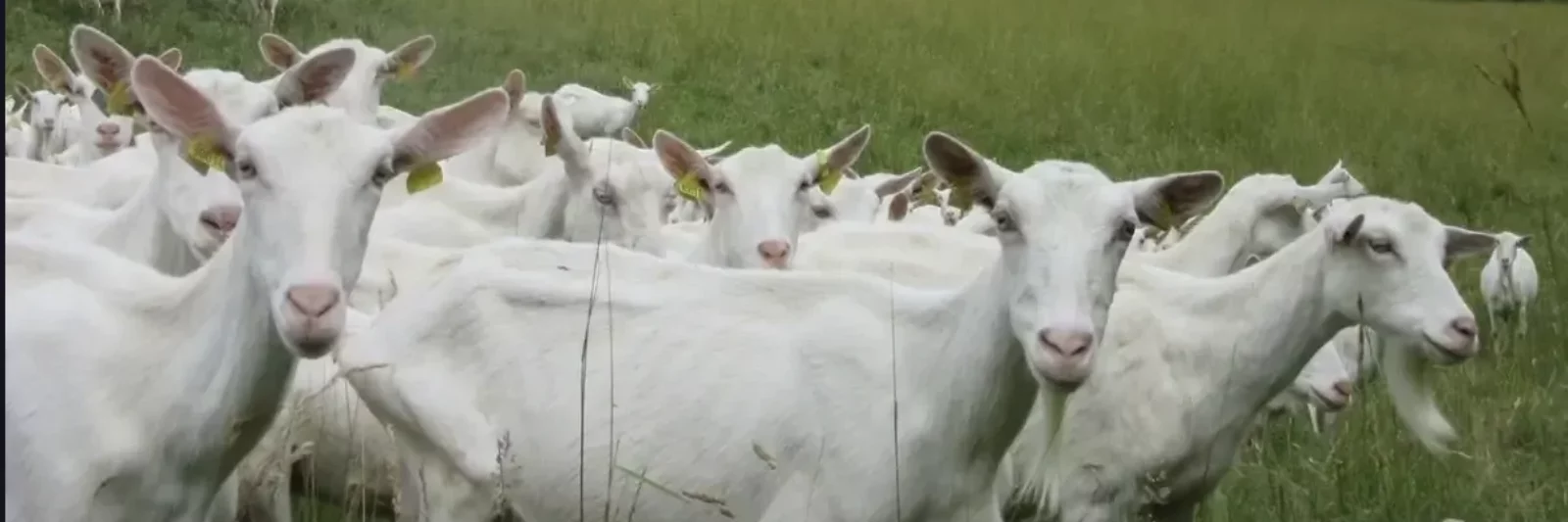
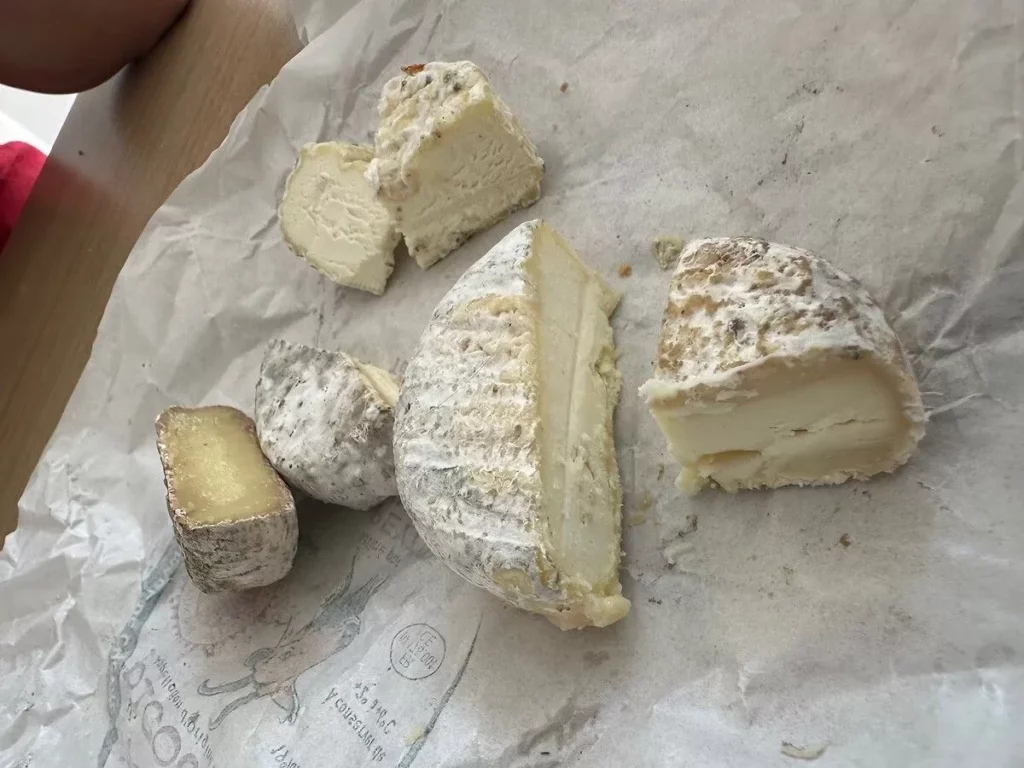
Picodon is a small goat cheese made from raw, whole milk, with a soft paste and a natural rind. Recognisable by its small flat-disc shape with rounded edges, it measures 5 to 7 cm in diameter and 1.8 to 2.5 cm in height, and weighs about 60 grams. A very small format: it takes only two-thirds of a litre of milk to make one piece.
Its name already tells you about its temperament: it comes from the Provençal picaoudou, which Frédéric Mistral translates in his dictionary as “small spicy cheese”. And that is exactly it — a cheese with a bold taste, which becomes all the more assertive as it ages.
Is picodon an Ardèche specialty?
Yes — but with an important nuance. Picodon is a great specialty of the Ardèche terroir, and it is undeniably one of the iconic cheeses tasted in the Ardèche. But unlike caillette or crique, which are properly from the Ardèche, picodon is a cheese shared between the Ardèche and the Drôme, on either side of the Rhône.
Its official appellation area mainly covers the two departments of the Ardèche and the Drôme, plus a few municipalities in the Gard (canton of Barjac) and the Vaucluse (canton of Valréas). Its former name was, in fact, “Picodon de la Drôme et de l’Ardèche”. It is therefore a cheese that the Ardèche proudly shares with its neighbour across the river — a specialty common to this whole south-eastern terroir, shaped by the Mediterranean climate and the rugged relief, particularly suited to goat farming.
For the visitor in the Ardèche, this changes nothing about the pleasure: picodon is everywhere on the markets, on the farms and on the good tables of southern Ardèche. It is a must-taste.
What is the origin and history of picodon?
Picodon is an old cheese. The first written records mentioning it go back several centuries — sources cite the 14th to the 16th century depending on the reference. The Drôme and the Ardèche were among the first goat-farming departments in France.
Its history is that of a peasant necessity that became a tradition. In these regions, the goat was often the only dairy animal of the modest farms, where sparse grass fed only a few animals. But goats run dry in winter: a way had to be found to preserve the milk as cheese. Thus was born picodon — a cheese that could be eaten more or less aged according to need, which remains true today.
This tradition was eventually recognised and protected: picodon obtained its Appellation d’Origine Contrôlée (AOC) in 1983, then its Appellation d’Origine Protégée (AOP) at European level. Today, the term “picodon” is reserved for cheeses produced in the appellation area and according to the specifications.
How is picodon made?
Making picodon follows a method that has stayed faithful to tradition. The raw, whole goat’s milk is mixed with a small amount of rennet. The curd is then ladled into perforated moulds. Draining and salting are done in two stages, with dry salt. The cheese is dried on racks, then aged for at least about twelve days.
Two ageings, two cheeses
It is the ageing that determines picodon’s character:
- Classic ageing: after about twelve days, picodon is still tender, mild, creamy. This is the “young” picodon.
- The Dieulefit method (or “washed”): ageing is pushed much further, with the cheese washed in clear water. The rind browns, the paste becomes unctuous, and the taste becomes distinctly bolder. This is the picodon for lovers of character.
The more a picodon is aged, the more it dries, hardens and develops its aromas. It is up to you to choose according to your taste — that is the whole appeal of this chameleon cheese.
Summary table
| Item | Information |
|---|---|
| Type | Raw-milk goat cheese, soft paste, natural rind |
| Terroir | Ardèche and Drôme (+ cantons of Barjac and Valréas) |
| Size | 5-7 cm diameter, ~60 g |
| Appellation | AOC since 1983, AOP |
| Ageing | Classic (~12 days) or Dieulefit method (washed, longer) |
| Taste | From mild (young) to bold and spicy (aged) |
How do you enjoy picodon?
Picodon lends itself to a thousand uses, which is what makes it such an endearing cheese.
On a cheese board
It is the end-of-meal cheese par excellence. Young and mild, or dry and bold, it has its place on a board of Ardèche cheeses — alongside other local specialties. A true “100% Ardèche” board is easily built around it.
In cooking
Picodon cooks wonderfully. Warm on a garlic salad, with a few sliced shallots, it makes a perfect starter. You can also keep it in flavoured olive oil — a nice nod to the terroir, knowing that olive oil is also produced in the area. Warm on a slice of bread, it also goes very well with a crique or a green salad.
Which wine with picodon?
Picodon naturally pairs with the wines of its terroir: a dry, lively white from the Côtes du Rhône, or a light red. For lovers of contrast, a sweet white wine can nicely balance the spiciness of a well-aged picodon.
Picodon, caillette, crique: the trio of the Ardèche terroir
If you are staying in southern Ardèche, these three specialties form the heart of a gourmet discovery. The Ardèche caillette, that ball of meat and chard; the Ardèche crique, the crisp potato cake; and picodon, the small goat cheese with a strong character. Together, the three tell a whole cuisine of terroir, peasant and generous. The best advice we can give you: taste all three during your stay.
Where to find picodon during your holiday?
Nothing simpler in southern Ardèche. Picodon is present on all the markets of southern Ardèche — notably the one in Bourg-Saint-Andéol, five minutes from Mas Saint Antoine, on Wednesday and Saturday mornings. You will also find it directly from goat farmers, on the farms that open their doors, and on the menus of the good tables of the area. Buying your picodon directly at the farm, chatting with the breeder, remains the finest way to discover it.
Why stay at Mas Saint Antoine to discover the Ardèche terroir?
- ✅ 5 minutes from the Bourg-Saint-Andéol market (Wednesday and Saturday mornings) for your picodons and local produce.
- ✅ Equipped kitchens in all the cottages — ideal for making your cheese boards and cooking picodon.
- ✅ 6 independent accommodations for 2 to 10 people, on a peaceful 2-hectare estate.
- ✅ Rated 4.9/5 from 137 verified reviews and selected by Petit Futé 2026.
Discover our accommodations on the our cottages in the Ardèche page, or browse our other food guides in Le Mag du Mas.
In conclusion
- Picodon is a small AOP raw-milk goat cheese, in the shape of a disc.
- It is a great specialty of the terroir, shared between the Ardèche and the Drôme.
- Its taste ranges from mild (young) to bold and spicy (aged with the Dieulefit method).
- It is enjoyed on a board, in a salad, or cooked, with a regional wine.
- Together with caillette and crique, it forms the gourmet trio to taste in the Ardèche.
Small in size, great in taste: picodon deserves its place on every Ardèche table. To be discovered, without moderation, during your next stay at Mas.
Frequently asked questions
What is picodon?
Picodon is a small goat cheese made from raw, whole milk, with a soft paste, in the shape of a flat disc of about 60 grams. From the terroir of the Ardèche and the Drôme, it holds an AOP. Its name comes from the Provençal picaoudou, "small spicy cheese", as its taste becomes bolder with ageing.
Is picodon an Ardèche cheese?
Picodon is a great specialty of the Ardèche terroir, but it is a cheese shared between the Ardèche and the Drôme, on either side of the Rhône. Its appellation area covers both departments, plus a few municipalities in the Gard and the Vaucluse. It is one of the iconic cheeses to taste in the Ardèche.
What is the difference between a young and an aged picodon?
A young picodon, aged about twelve days, is tender, mild and creamy. A picodon aged with the Dieulefit method (washed ageing, longer) has a browned rind, an unctuous paste and a distinctly bolder, spicier taste. The more picodon ages, the more it dries and develops its aromas.
Since when has picodon held an AOP?
Picodon obtained its Appellation d'Origine Contrôlée (AOC) in 1983, then its Appellation d'Origine Protégée (AOP) at European level. These protections guarantee that the cheese is produced in its area of origin and according to a traditional method.
How do you enjoy picodon?
Picodon is enjoyed on a cheese board, young or aged. It also cooks very well: warm on a garlic salad, kept in flavoured olive oil, or warm on a slice of bread. It pairs with a dry, lively white wine or a light regional red.
Why is picodon called that?
The name picodon comes from the Provençal picaoudou, which Frédéric Mistral translates as "small spicy cheese". The term refers to its taste, which becomes spicy and bold with ageing. "Picho" also means "small" in the langue d'Oc, matching its small size.
Where to buy picodon in the Ardèche?
You can find picodon on all the markets of southern Ardèche, such as the one in Bourg-Saint-Andéol on Wednesday and Saturday mornings, as well as directly from goat farmers and on the farms. Buying your picodon at the farm, from the breeder, remains the finest way to discover it.
Which wine to pair with picodon?
Picodon pairs well with the wines of its terroir: a dry, lively white from the Côtes du Rhône, or a light red. To contrast with a well-aged, spicy picodon, a sweet white wine can also work very well.
What are the great specialties to taste in the Ardèche?
Among the great specialties of the Ardèche terroir are caillette (a ball of meat and chard), crique (a grated potato cake) and picodon (an AOP goat cheese). This trio forms the heart of a lovely gourmet discovery during a stay in the Ardèche.
Is picodon eaten all year round?
Picodon is enjoyed all year round. Historically, it was created precisely to preserve goat's milk, as the animal runs dry in winter. Depending on the chosen ageing, young or drier, its tasting adapts to the seasons and to your cravings.
Avis google

Le logement est nickel, très agréable et parfaitement entretenu\. La piscine est top, un vrai bonheur pour profiter et se détendre \! ☀️🏊♀️
Les conseils pour les activités et les visites étaient vraiment hyper adaptés à nos envies, ce qui nous a permis de découvrir de très chouettes endroits\. Le lieu est vraiment sympa, calme et agréable\.
Une adresse que nous recommandons les yeux fermés \+\+\+ \! Merci encore pour cet accueil et ce super séjour, nous reviendrons avec grand plaisir \! 😊
Famille Descampiaux

Nous qui souhaitions nous reposer et prendre du bon temps, nous avons été plus que servis.
Notre chalet "lavande", proposait tout le nécessaire, à l ombre des arbres, nous avons pu nous détendre bercés par le chant des cigales.
Après les activités sportives, visites...quel bonheur de venir se rafraîchir dans cette magnifique piscine.
Nous avons vraiment apprécié l'accueil et la gentillesse de nos hôtes.
Quel bonheur de ne pas se soucier de draps, de serviettes, torchons....
En bref, pari réussi, du repos, des activités et de la convivialité...
Merci pour ce beau séjour et ces échanges.
Nous reviendrons !
Élisabeth et Patrick.

Le gîte est top, conforme à la description.
Les propriétaires sont très sympas et de très bons conseils pour les visites, les restos et activités à faire aux alentours.
Nous sommes venus avec notre chien qui a pu se déplacer librement dans la propriété, en toute sécurité.
Location à recommander !

Un très bon accueil des propriétaires.
Des prestations ( paella, canoë....),que nous avons tous apprécié.
Des couchages confortables.
Nous reviendrons avec grand plaisir.
Merci

Concernant les hébergements et les infrastructures, tout est parfait. On ne manque de rien et le lieu est magnifique.
Encore merci pour ce week-end qui fût des plus agréable !

Le domaine est superbe, très bien entretenu, au calme, au cœur de l’Ardèche méridionale, avec une vraie ambiance conviviale et familiale. Les différents gîtes permettent à chacun d’avoir son espace tout en gardant un vrai lieu de rassemblement pour partager les repas et les activités.
Un immense merci également aux propriétaires pour leur disponibilité, leur écoute et leur gentillesse tout au long de l’organisation. Nous avons été très bien accompagnés avant le week-end avec de nombreux conseils utiles, aussi bien pour les prestataires que pour l’organisation générale de l’événement.
Tout a été simple, fluide et agréable. Les recommandations données sur place étaient excellentes et nous ont permis de construire un week-end vraiment réussi.
Le cadre est idéal pour ce type de rassemblement familial ou amical : piscine, nature, tranquillité, nombreux hébergements et beaucoup d’activités à faire dans les environs.
Nous gardons un très beau souvenir de ce week-end et nous recommandons le Mas Saint-Antoine sans hésitation.
**La seule petite contrainte du week-end concerne la gestion des déchets, puisqu’il n’y a pas encore de bacs d’ordures ménagères ou de tri directement sur le domaine et qu’il faut se rendre au village. Cela ne nous a pas posé de véritable problème, mais ce serait un vrai plus à l’avenir.


Bref un endroit au top que nous recommandons vivement

Le lieu est magnifique, avec une très belle vue et très calme.
La propriétaire a été charmante et à l'écoute de nos besoins quels qu'ils soient; un climat de confiance s'est vite installé.
Le lieu est très accessible et les parties communes pour se réunir sont très bien équipées.
La literie est bonne et les chambres propres.
Je recommande

Le cadre extérieur est également très appréciable : piscine, forêt, ping-pong, terrain de pétanque et grande terrasse pour profiter encore un peu du soleil d’automne ☀️
Merci Hélène et Bernard pour votre accueil chaleureux!
Merci également au traiteur So’ brunch de nous avoir livré à domicile pour régaler nos papilles tout le week-end!
Une expérience réussie! 🥳

L'espace piscine est vraiment super avec des nombreuses assises si vous êtes un grand groupe.
Tous les gîtes sont très propres et très bien équipés. Pas de plaintes des invités sur la literies en tout cas! Petit plus : les lits étaient fait à l’arrivée et les serviettes à disposition sur les lit.
Nous avons pu également voir de superbes couchés de soleil sur la vallée. Sans oublier la vue dégagée sur le mont ventoux.
Une très chouette adresse : j’y retournerai avec grand plaisir ! Pourquoi pas les 35 ans !


Bernard et sa femme sont adorables, humains, serviable et très à l'écoute.
C'est un gîte familial, tranquille et agréable.
Et il n'y a pas de moustiques ! 😅
Nous avons passé un excellent séjour.
Si nous revenons en Ardèche ça sera ici, merci encore pour tout 🙏


Un accueil très chaleureux d’Hélène et Bernard qui nous ont indiqué plusieurs sites à visiter. On n’oublie pas Djingo, le super copain de notre chienne.


Gîte de l’olivier pour notre séjour très propre et très bien équipé , pensez juste au tire bouchon ^^ seule petit bémol pour la personne dormant dans le salon la VMC peut être bruyante pour une personne ayant le sommeil léger sinon rien à redire nous reviendrons si nous passons dans le coin ! Merci pour votre accueil

Patricia et stéphane

Rien à redire! Il nous tarde de revenir.


Notre chien aussi a apprécié le séjour, il a pu navigué à son aise sur le domaine.
Les propriétaires sont très sympathiques et arrangeants.
Nous avons beaucoup aimé notre semaine au Mas et nous recommandons vivement cette adresse.


Je recommande fortement

Logements/cuisines et extérieurs très bien équipés et adaptés aux enfants!
Merci pour l’accueil :-)

Des propriétaires des plus accueillants, toujours à l'écoute de nos remarques et de notre bien être.
Beaucoup d'activités à faire autour du Mas saint antoine
on pense déjà à notre prochain séjour au Mas, c'est un lieu à connaître et à découvrir sans attendre, vous passerez un séjour plus que reposant
merci encore aux propriétaires du Mas Saint Antoine , lieu incontournable

La piscine est juste splendide dans un écrin de verdure.
Quant aux propriétaires ils sont adorables et prêt à vous aider et vous conseiller. Superbe semaine

Nous conseillons le lieu car idéalement situé pour circuler et visiter cette belle région.

Très belle piscine avec pergolas pour éviter les coups de soleil.
Les propriétaires sont à l'écoute,
disponibles et de très bons conseils pour découvrir la région.
Maxime et Laetitia

Les propriétaires sont prévenant
Piscine gîte WiFi dans les chalets
Vue splendide


Nous avons pu partager de très bons moments avec les hôtes, qui sont de très bons conseils sur ce qu'il y a à faire et à découvrir aux alentours.
Le cadre et le logement sont magnifiques, un vrai havre de paix où il fait bon de se retrouver entre amis ou en famille
Le Mas Saint Antoine est idéalement placé pour profiter de toutes les activités touristiques et sportives
La piscine avec vue est sécurisée et splendide, la réalité est conforme aux photos, tout est très bien équipé et choisi avec goût
Merci à nos hôtes pour l'accueil, nous reviendrons avec plaisir !


Très vaste et parfaitement équipé.
Accueil cordial .
Gite à recommander.

Un grand merci aux hôtes qui nous ont très bien reçu. Le cadre du mas saint Antoine est idéal pour des retrouvailles familiales, sécurisé et très bien équipé.
Les gîtes sont décorés avec goût, propres et fonctionnels. La piscine, les terrains de pétanques, la table de ping-pong sont un vrai plus. Nous avons même eu la possibilité de louer un karaoke!
Toute la famille, des petits aux grands garderons un super souvenir de cet endroit. Nous gardons précieusement l’adresse.
Merci beaucoup et à bientôt !
Julie et toute sa famille :)


Les parties de pétanques et de ping-pong a l'ombre des arbres auraient pu durer jusqu'au lendemain si les enfants qui se sont éclatés ne vennaient pas nous interrompre😁.
Nous n'avons pas pu profiter de la piscine car la température ne le permettait pas, mais je ne doute pas que ce doit être un délice en été.
Un seul regret: ne pas avoir été initié par Bernard à la recherche de truffes dans sa truffière privée...😆
Nous reviendrons, c'est certain, et nous vous recommanderons vivement et sincèrement!
Longue vie au Mas St-Antoine et merci Elena et Bernard d'offrir un lieu magique.


Je recommande


I recommend this well located and quiet place.

Logement impeccable, décoré avec goût, et fonctionnel.
Notre petite famille à pu profiter d’un séjour agréable , et dépaysant.
La piscine avec vu imprenable était un très apprécié.
Petit plus: notre chien a pu profiter du voyage également…
Merci à vous.
Romain Juliette et les enfants.

,


Les propriétaires sont extrêmement sympathiques, a l'écoute et très serviables, nous y reviendrons a coup sûr


Une piscine au top du top ,les propriétaires sont très accueillants et sympathique
Nous y reviendrons avec plaisir


Perfect welcome in joy and good humor, beautiful place and the chalets are good. The swimming pool is superb and equipped. The tenants informed us well about the surroundings. This place is magnificent !!!


Nous avons pu profiter de la piscine mais aussi des alentours. Nous regrettons de n’être pas restés davantage pour profiter encore de la région.

