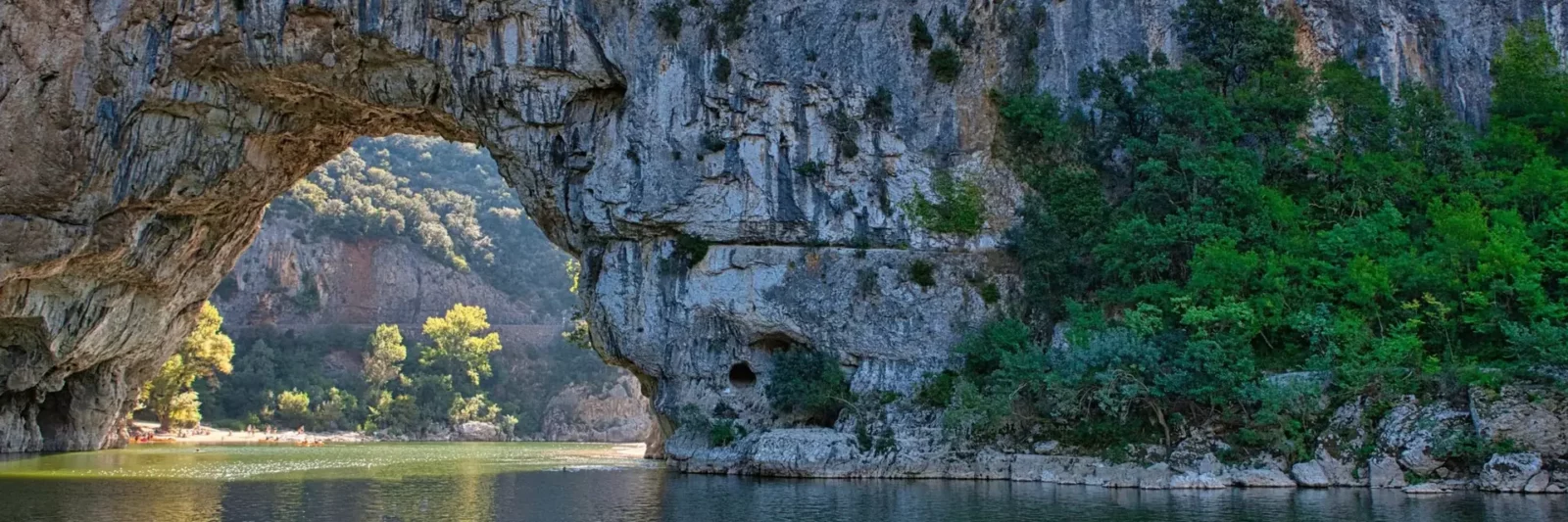

Some places justify a trip to Ardèche on their own. The Pont d’Arc is one of them. A natural arch 54 metres high and 60 metres wide, carved by the river over 124,000 years, spanning the Ardèche in a landscape of limestone cliffs and Mediterranean scrubland. It is Europe’s largest natural arch over a still-active river — the only example of its kind in France. From Mas Saint Antoine in Bourg-Saint-Andéol, the Pont d’Arc is just 18-20 minutes by car. Here is everything you need to know before you go.
Key facts and figures
| Feature | Detail |
|---|---|
| Height | 54 metres |
| Width (opening) | ~60 metres |
| Age | 124,000 years (erosion process began ~500,000 years ago) |
| Status | Protected natural site since 24 January 1931 — National Nature Reserve — Sensitive Natural Area |
| Record | Europe’s largest natural arch over a still-active river — only case in France |
| Access | Free and open all year round |
How the Pont d’Arc was formed: the geology explained simply
About 500,000 years ago, the Ardèche river traced a wide meander around a limestone spur. Water laden with pebbles and sediment began seeping into a crack in the rock at the narrowest point of the loop. Over hundreds of thousands of years, erosion hollowed out, widened and deepened the passage. Around 124,000 years ago, the arch fully opened: the river abandoned its old course to flow directly under the new opening, leaving the former meander dry — the Combe d’Arc we see today.
The result is a natural arch that geologists consider unique in the world in its category — a stone arch over a still-active, still-evolving river. In a few thousand or million years, erosion will continue and the Pont d’Arc will eventually disappear.
On the heights of the Combe d’Arc, sheltered within this same cliff face, lies the entrance to the Chauvet Cave — the cave containing the world’s oldest known cave paintings, dated to around 36,000 years ago. Two wonders of nature and humanity, united in the same place.
What to do at the Pont d’Arc
1. Admire from the viewpoint
A dedicated viewpoint on the Gorges road (D290) offers the most spectacular view of the arch — the one seen on every Ardèche postcard. The must-see photo spot, with orientation tables. Come early in the morning or late afternoon for the best light and fewer crowds.
2. Swim on the two beaches
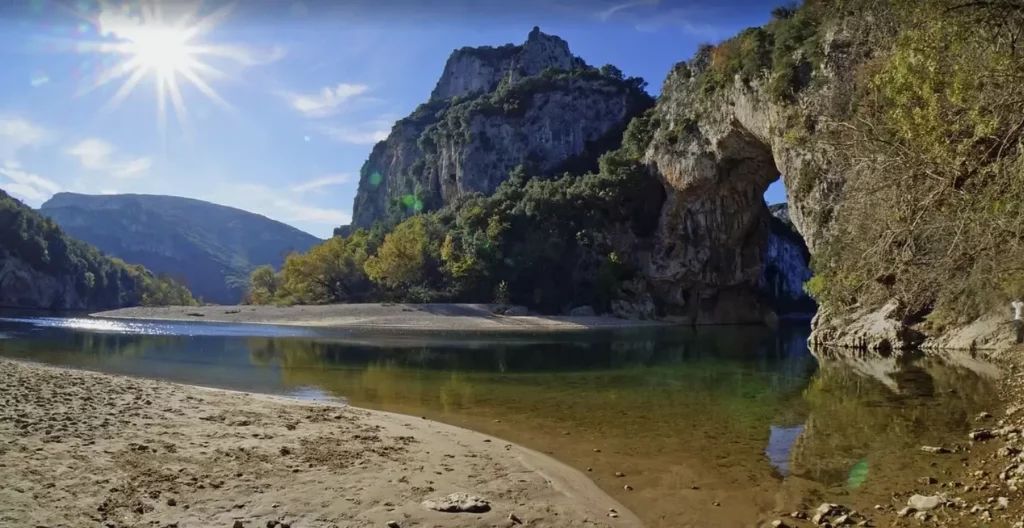
Two pebble beaches flank the arch — one upstream, one downstream. Swimming is free and unrestricted all year. Water reaches 20-24°C in July-August. Arrive before 9 am in peak season to find a spot on the beach.
3. Pass under the arch by canoe
The highlight of any Ardèche Gorges descent. All canoe operators in Vallon-Pont-d’Arc offer routes that pass under the Pont d’Arc. Sliding under the 54-metre arch with the cliffs on either side is a moment nobody forgets. Mini-descents (6-14 km) allow you to pass under the arch in a half-day.
4. Hike to the site or around it
From the Vallon-Pont-d’Arc tourist office car park, a walking trail leads to the Pont d’Arc in 1h30 to 2 hours (4.5 km, moderate elevation, partly stony path — suitable footwear required). A fine alternative to driving, combining a walk and a swim.
5. Drive the Gorges tourist road (D290)
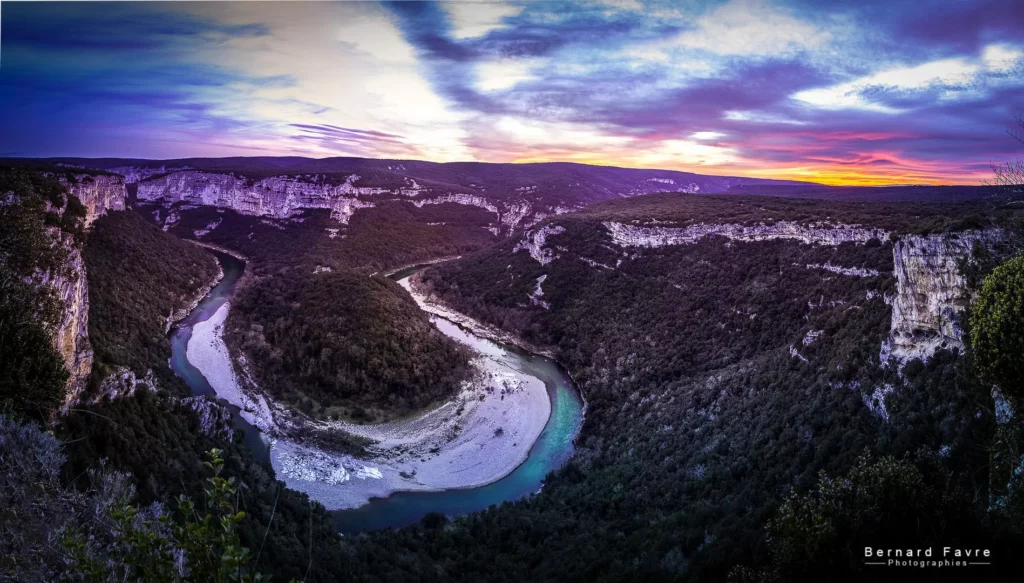
The Gorges de l’Ardèche tourist road covers 30 km between Vallon-Pont-d’Arc and Saint-Martin-d’Ardèche with 11 viewpoints. Allow 1.5-2 hours with stops. A must for seeing the gorges without canoeing.
Access and parking 2026
Two on-site car parks (paid in season)
- P2 Méandre (renovated, open from 4 April 2026)
- P2 Belvédère (downstream of the arch)
2026 pricing: paid 4 April to 28 September, 10 am to 7:30 pm. Rate: €0.80 per quarter-hour for the first 2 hours, then €0.90 per quarter-hour thereafter. Maximum stay: 9h30.
Tourist office car park in Vallon (P1)
Recommended in July-August. 30 minutes free, then €2/hour, maximum 9h30.
Free shuttle
The best solution in peak season: park in Vallon-Pont-d’Arc and take the free shuttle to the Pont d’Arc beach.
- June and September (weekends): every 40 minutes
- July-August (every day): every 20 minutes
When to visit
| Period | Advice |
|---|---|
| July-August | Arrive before 9 am or after 5 pm. Free shuttle from Vallon recommended. |
| June and September | Moderate crowds. Water still warm in September. Any time of day works well. |
| May and October | Very few visitors, beautiful light, cooler water. Ideal for walking and photography. |
Combining with the Chauvet Cave
Chauvet Cave 2 (Caverne du Pont d’Arc) is the faithful replica of the Chauvet Cave, a UNESCO World Heritage site. It opened in 2015 and offers a 90-minute guided visit through the world’s oldest known cave paintings. Around €18 per adult. Advance booking required — slots fill quickly in July-August. Website: caverne-pont-darc.fr
The ideal combination: Pont d’Arc + swimming in the morning, Chauvet Cave 2 in the afternoon (air-conditioned — welcome in peak summer heat). Everything within 10 minutes of each other by car.
What not to do
- ❌ Walk on the arch — prohibited since 1931
- ❌ Bivouac on the beach — prohibited in the nature reserve
- ❌ Leave litter — zero tolerance, wardens patrol regularly
- ❌ Collect rocks or plants — prohibited in the reserve
- ❌ Park on the D290 roadside — fines apply
The legend of the diabolical pilgrim
According to local legend, a jealous lord from Sampzon locked his beautiful wife in a tower. An ugly pilgrim arrived, helped the woman escape, and the lord prayed desperately. The mountain split open, the waters flowed under it and carried the pilgrim’s boat to the lord’s feet. The woman was returned — and the pilgrim transformed into a horned devil before vanishing. The arch was born of this miracle. The geological truth may be less romantic, but no less extraordinary.
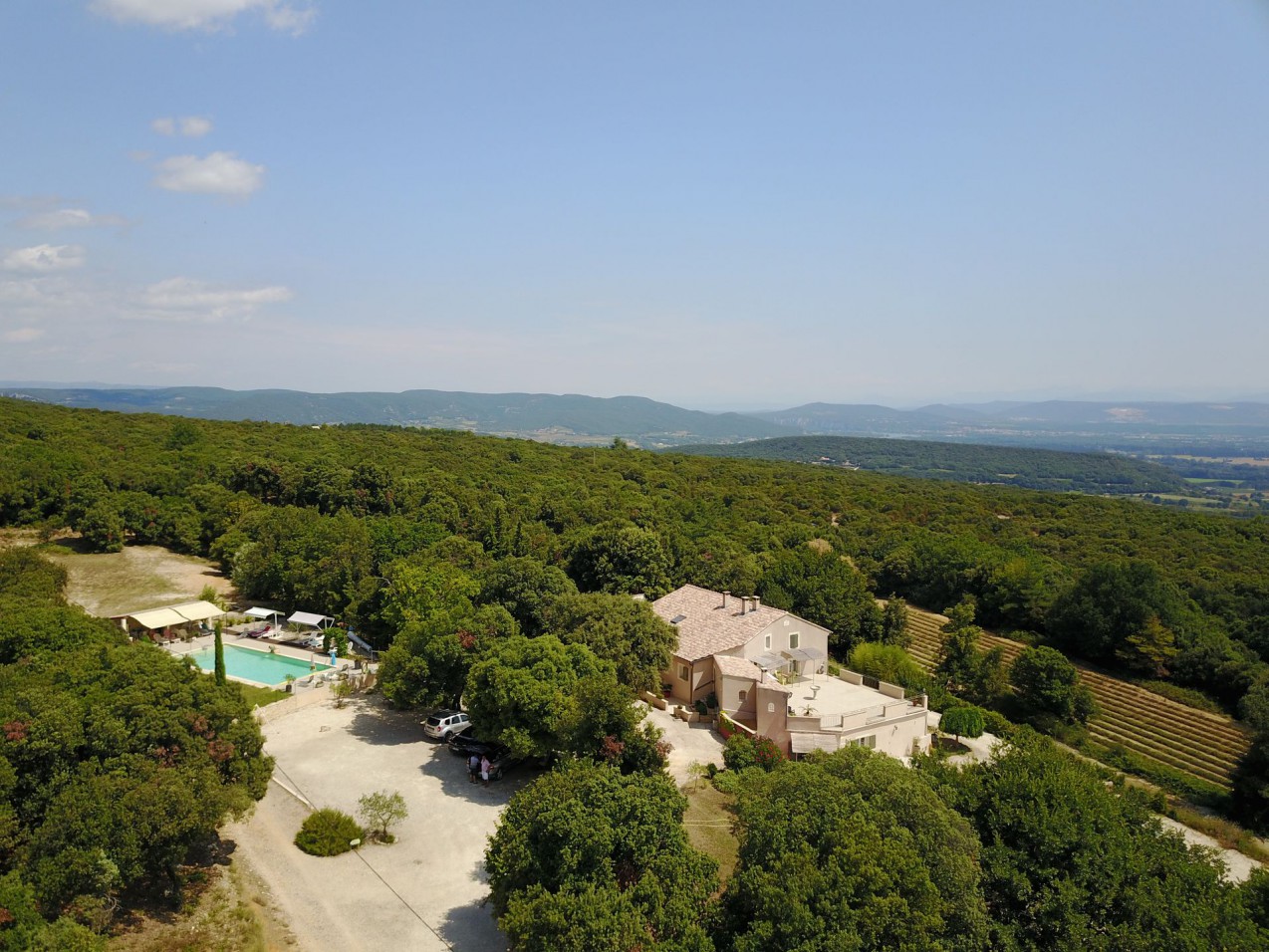
From Mas Saint Antoine: planning your visit
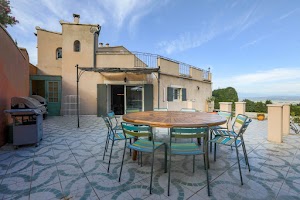
The Mas is 18-20 minutes from the Pont d’Arc. A suggested day: depart at 8 am, arrive before the crowds, swim on the upstream beach, admire from the viewpoint, lunch in Vallon-Pont-d’Arc, visit Chauvet Cave 2 in the afternoon, return to the Mas for the saltwater pool. Bernard’s tip: the viewpoint at sunrise — before the car parks fill — is one of the finest sights you can offer guests in July.
FAQ about the Pont d’Arc in Ardèche
Is the Pont d’Arc free to visit?
Yes, access to the Pont d’Arc is completely free all year round. Only parking is charged in season (4 April to late September 2026). A free shuttle runs between Vallon-Pont-d’Arc tourist office and the site every 20 minutes in July-August.
How big is the Pont d’Arc?
The Pont d’Arc is 54 metres high and approximately 60 metres wide. It is Europe’s largest natural arch over a still-active river, and the only example of its kind in France. The arch formed about 124,000 years ago through a process of karst erosion that began around 500,000 years ago.
Can you swim at the Pont d’Arc?
Yes, swimming is free and unrestricted. Two pebble beaches flank the arch, one upstream and one downstream. Water reaches 20-24°C in July-August. Arrive before 9 am in peak season to find a good spot.
Can you walk on the Pont d’Arc?
No. The Pont d’Arc has been a classified natural site since 24 January 1931. Walking on the arch is prohibited to protect this fragile geological monument.
How to park at the Pont d’Arc in summer?
Two car parks are available on site (P2 Méandre and P2 Belvédère), paid from 4 April to 28 September 2026. In July-August, the easiest option is to park at the Vallon-Pont-d’Arc tourist office (30 min free, then €2/hour) and take the free shuttle to the site every 20 minutes.
Can you pass under the Pont d’Arc by canoe?
Yes, and it is one of the highlights of any Ardèche Gorges descent. All canoe operators in Vallon-Pont-d’Arc offer routes passing under the arch. Mini-descents of 6-14 km allow you to pass under the Pont d’Arc in a half-day.
What is the best time to visit the Pont d’Arc?
September is ideal: warm water, far fewer crowds and beautiful autumn light on the cliffs. In July-August, arrive before 9 am or after 5 pm for the best experience. May-June offer lush scenery and very few visitors.
What is the Chauvet Cave and how does it relate to the Pont d’Arc?
The Chauvet Cave was discovered in 1994 on the heights of the Combe d’Arc, the cliff above the Pont d’Arc. It contains the world’s oldest known cave paintings, dated to around 36,000 years ago, and is a UNESCO World Heritage site. The original cave is closed to the public. Chauvet Cave 2 (Caverne du Pont d’Arc), a faithful full-scale replica opened in 2015, is about 10 minutes by car from the Pont d’Arc. Around €18 per adult, advance booking required at caverne-pont-darc.fr.
How far is the Pont d’Arc from Mas Saint Antoine?
Mas Saint Antoine in Bourg-Saint-Andéol is about 18-20 minutes by car from the Pont d’Arc. It is one of the essential visits from the estate, easily combined with swimming, the Gorges tourist road or a Chauvet Cave 2 visit in the same day.
Can you hike to the Pont d’Arc?
Yes. A walking trail from the Vallon-Pont-d’Arc tourist office reaches the Pont d’Arc in 1h30 to 2 hours (4.5 km, moderate elevation, partly stony path — suitable footwear required). A rewarding alternative to driving, combining walking and swimming.
Article written by Bernard Favre, owner of Mas Saint Antoine.
Avis google